
SL-1 Curriculum Vitae 
Nature Water: A journal for all water-related research
Heejung Jung
Nature Water, Nature Portfolio, Springer Nature
Water challenges are becoming increasingly complex, spanning issues of scarcity, pollution, ecosystem degradation, and public health. Addressing these challenges requires advances across multiple disciplines, from engineering and environmental science to microbiology, chemistry, and policy. Nature Water was launched to serve as a leading platform for publishing impactful research that advances fundamental understanding of water systems and supports sustainable water management.
In this presentation, I will introduce Nature Water and its positioning within the global water research landscape. The presentation outlines journal’s scope, highlighting key areas of interest across water quality, treatment technologies, resource recovery, hydrology, and governance. I will also discuss the journal’s editorial expectations and selectivity criteria, including conceptual advance, broad relevance, and mechanistic insight. Finally, emerging directions where the journal seeks to expand and encourage contributions that push the boundaries of water research will be highlighted.
SL-2 Curriculum Vitae 
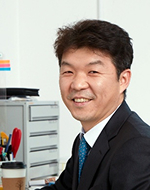
Introduction to Basic Research Programs in Life Sciences by the NRF of Korea, 2026
Yonghwan Kim
Division of Life Sciences, National Research Foundation of Korea, Daejeon, Republic of Korea
The major programs include: (1) Individual Basic Research supporting early-career, mid-career, and leading researchers; and (2) Group Research such as research centers and collaborative projects. Special emphasis is placed on assisting early-career researchers in establishing their research capacity, while mid-career researchers are provided with stable, long-term support. Leading researchers are encouraged to undertake large-scale projects that can generate world-class outcomes.
Research funding will be differentiated according to career stage and project characteristics. Evaluation criteria will prioritize creativity, challenge, and potential academic contributions, with greater weight placed on long-term impact and scholarly value rather than short-term results. To improve the research environment, measures will be implemented to enhance flexibility in research fund management, reduce administrative burdens, and strengthen transparency and research integrity, thereby enabling researchers to focus on their scientific work.
Finally, strategic investment will be expanded in future-oriented fields such as artificial intelligence and biohealth, which are recognized as national priorities. Through these initiatives, the NRF seeks to ensure that basic research not only advances academic excellence but also contributes to social and industrial innovation.

SL-3 Curriculum Vitae
End-to-End Hyper-Personalization in Cosmetics: From Sensory Digitization and Skin Phenotyping to Automated Manufacturing
Chun Ho Park1*,2, Donghoan Seo2, Jinjoo Park2, Sujung Choi2, Hyunook Kim2,Hoonjoo Jung2
1Cosmax BTI R&I Center
2Cosmax R&I Center, Gyeonggi-do 13486, Republic of Korea